


Discover More News

Correct Hearing Terms and Conditions
1. Supply and Warranty
We sell the hearing instruments and other associated products and services (Goods) to you and you agree to buy them on the terms which are explained here and on your Hearing Assessment form. We agree to supply Goods to you that are the same as on your Assessment form. The Goods are warrantied against mechanical failure or poor materials and/or poor workmanship for the period stated in your TotalCare pack, which will not be less than 2 years for hearing aids and 6 months for associated products from the date of fitting. (This does not Include consumables). In the event that there is a failure, please return the Goods to Correct Hearing at their Head Office. Please include the order reference when returning the Goods and we will either repair or replace with new Goods and return them to you.
The warranty is in addition to and does not affect your legal rights relating to Goods that do not work properly or are not described correctly. For further information about your legal rights, you can contact your local authority Trading Standards Department or Citizens Advice Bureau.
2. Circumstances where the warranty will not apply
Goods, which do not work for any reason other than in (1) above, such as interference with the hearing instrument, accidental damage, failure to keep the instruments clean, failure to use in accordance with the operating manual or repairs by an unauthorised agent of the manufacturer are not covered by this warranty. If you return Goods to us in these circumstances, we will let you know if this applies. We will give you the choice to have the Goods back or repair them, if possible, but in either case, this will be at your cost.
3. Money back guarantee
Under the terms of this agreement we give you a 30-day money back guarantee.
If you are not satisfied with the hearing system provided, even though it is of satisfactory quality and correctly prescribed, providing it is returned to us within 30 days of the date of fitting, in its original condition, with the original packaging. We will refund to you, as set out in paragraph 11, the cost of the hearing instruments, less any charges agreed on the front of the order form.
This does not affect your legal rights including any right to cancel under paragraph 9 below.
4. VAT
Professional services are exempt from
VAT therefore this is not applied to the total cost of the goods & services supplied
5. Repair work
If any Goods require repair (other than under the original warranty period) we guarantee such repair work for a period of 6 months from the date of return of the Goods to you. Whilst your Hearing Aids are away for repair, we will provide you with loan aids.
6. Aftercare service
Within four weeks of the fitting of your hearing instruments a follow up appointment will be arranged to see how you are getting on with your hearing instruments and we will fine-tune or make any other necessary adjustment if required at that time.
Further follow up appointments may be arranged if required. After this, we will see you at six monthly intervals as set out in the TotalCare pack you receive at the time of your original fitting date.
Batteries, repairs, service and all entitlements relating to the purchase of your Hearing Aids, are outlined in your TotalCare pack. All appointments will normally be made during the hours of 9am to 5pm Monday to Friday, excluding bank holidays and weekends, unless otherwise agreed.
7. Registration of Hearing Audiologists All Hearing Aid Audiologists must be registered with the Health and Care Professions Council and must follow their Standards of conduct, performance and ethics (available on www.hpc-uk.org).
All our professional employees are members of The British Society of Hearing Aid Audiologists (BSHAA) and adhere to the BSHAA Code of Practice, which can be found on the BSHAA website (www.bshaa.com).
8. Customer Care
Correct Hearing follows the rules of the
BSHAA Customer Care Scheme. If you have a problem about the goods or service you receive from the company or any of our Hearing Aid Audiologists, please contact us in the first instance.
If we are unable to resolve your complaint, you can contact BSHAA who will take up the matter on your behalf.
This does not affect your legal rights.
9. Right to cancel for sales in the home or away from our business premises
(a) If you agree to purchase hearing instruments, hearing protectors or moulds in your home, or away from the company's premises, as these Goods are personal, they have health protection and hygiene issues and for this reason, the 30-day cancellation period may not apply after fitting. This is allowed under the (Consumer Contracts (Information, Cancellation and Additional Charges)
Regulations 2013, Part 3 section 28 (3) (a)). You may cancel prior to delivery subject to paragraph 10 (e) if applicable.
However, Correct Hearing will treat each case on its merit. This does not affect your legal rights if the Goods are faulty.
(b) For Goods that do not have personal health protection or hygiene issues or are for services in paragraph 10 below you may cancel the contract, without giving any reasons, within 30 days starting the day after delivery of the Goods by telling us in writing of your wish to cancel.
10. When we can keep money paid
If you cancel because you cannot get on with your hearing system under paragraph 3 above, or work on the customised Goods has begun with your agreement, you will be required to pay for any Goods or services supplied.
If goods are lost or not returned in the same condition that they were given to you, monies may be kept by us.
Where goods are personalised, there is no right of refund. If you cancel before delivery and work has commenced on the Goods you will be required to pay a reasonable amount to cover the costs incurred. This does not affect your legal right if the goods are faulty.
11. What happens when I cancel?
If you have a right to cancel this contract and do so, we will reimburse all payments received from you without undue delay and not later than
- 10 days after the day we get the Goods back from you or
- if earlier. 10 days after the day you give us proof that you have returned the Goods or
- if no Goods have been supplied 10 days after the day on which we are told about your decision to cancel the contract.
We will make the repayment using the same means of payment as you used for the initial contract, unless we agree with you a different means.
We have the option to request that you send the Goods back by post (tracked and insured for the total cost of the Goods). The responsibility is yours to return the Goods to us unless otherwise agreed.
12. When do I own the Goods?
Even though delivery of the Goods is made, you will not own the Goods until we have received payment. Until payment has been made, we have the right to ask you to deliver the Goods to us.
- LlabilityIf the Goods do not work or Services are performed in breach of this Agreement we will supply Goods and/or perform Services again. If we fail to do so we will give you a full refund unless the fault is caused by you or someone other than us. If you suffer any additional losses or liabilities we will pay for these where you provide written evidence and up to a limit of double what you paid to us. If there is any fraud or the supplies cause death or physical injury we will compensate you for all resulting losses. This clause does not affect your rights under law such as rights for faulty and
misdescribed goods, poor service and time limits on claims.
- Data protection
You agree to your data going on our marketing database, which will be used to confirm appointments and to send you information about future products, services or events. We will not send this data to anyone else and you can be removed from the list if you tell us in writing. We need 30 days' notice to remove you from our list.
15. Notices
If you give any notice under these terms and conditions this must be in writing and sent to the Company address below.
16. Applicable law
English Law will apply to this contact.
Coping with Hearing Loss: How to Deepen Your Relationships
Hearing loss can make it challenging to maintain and deepen relationships. However, it doesn't have to be a barrier to a meaningful life.
Hearing loss can be isolating and make it difficult for you to fully participate in conversations and activities with loved ones, leading to frustration, sadness, and loneliness. Taking steps to deepen relationships can help improve communication and understanding with your loved ones, participate more fully in social interactions, and feel more connected and supported.
Here are a few strategies for coping with hearing loss and deepening your relationships.
Utilise Open Communication
Establish open and honest communication with your loved ones by sharing your feelings, needs, and experiences with hearing loss so they can understand and support you better.
Let them know the situations where you find it more challenging to hear and understand and ask them to help you by speaking clearly, facing you, and using simple sentences. You can communicate your preferences for communication styles and environments by avoiding noisy places or using captioning on TVs and videos.
Embrace Technology
Technology can help you deepen your relationships. Consider getting your hearing checked by an audiologist and, if necessary, invest in hearing aids or cochlear implants to enhance your ability to listen and understand. You can also use captioning tools for TVs and videos, such as closed captions on your phone. Take the time to learn how to use these devices properly to benefit from them the most.
Try Creative Activities With Loved Ones
Look for new and unique activities that rely on something other than hearing. You can do this by trying new activities such as writing, drawing, or reading. You can also take up a new hobby, such as gardening, bird watching, or cooking.
Try looking for new activities you can do together to help you connect with others and have meaningful relationships.
Create or Join a Community
Seek support from family, friends, and professionals, such as audiologists and counsellors. In addition to communicating your situation to your close friends and family, seek support groups or counselling to connect with others going through similar experiences and learn from their coping strategies.
A community can provide emotional support and help you navigate the practical aspects of living with hearing loss.
Hearing loss does not mean the end of meaningful interaction. Despite the challenges, you can still deepen your relationships by improving your communication and connection with loved ones. Your audiologists here at Correct hearing can help you understand your situation and the available options.
How Hearing Loss is Affecting Your Marriage
Hearing loss can significantly impact your marriage, affecting various aspects of the relationship, such as communication, intimacy, and daily life. Communication is the foundation of all relationships, and when you or your partner struggles to hear, it can lead to frustration and a communication breakdown.
It is important to recognise and understand how the problem affects both of you and find the best solution before it ruins your relationship.
Ways Hearing Loss is Affecting Your Marriage
Communication Breakdowns
Communication breakdowns are a common issue that can arise from hearing loss, making it difficult for couples to understand each other, leading to frustration and misunderstandings. The lack of effective communication can ultimately lead to feelings of isolation and disconnection. Such feelings can then affect intimacy and make it difficult for you to understand each other's needs and desires, leading to a lack of emotional connection.
Stress and Strain
Hearing loss can cause stress and strain in marriage as you or your partner may have to adjust your lifestyle and behaviour, leading to frustration or resentment. To maintain a healthy marriage despite a diagnosis of hearing loss, you must figure out ways to communicate effectively, seek support, and adjust your lifestyle to meet both of your needs.
Emotional Distress
Hearing loss can affect the emotions of the partner who does not have hearing loss; for example, emotions can include increased frustration, feelings of being ignored, or sadness. Your partner may also suspect that you deliberately filter out unwanted information, highlighting the emotional toll that hearing loss can take on a relationship and the potential for mistrust and resentment.
What To Do to Combat Hearing Loss in Your Marriage
Visit an Audiologist like us!
Treatment and early detection of hearing loss can greatly benefit your relationship. If you or your partner have hearing problems, encourage them to get treated and acknowledge their hearing loss. The sooner you address the hearing loss, the sooner you can collaborate with an audiologist to incorporate solutions.
Openly Talk to Your Partner
When left untreated, hearing loss can lead to auditory deprivation, putting a person at increased risk of cognitive decline. Talk about such risk factors to motivate your partner to seek treatment. Openly talking with your partner about their hearing loss and your concerns will keep your relationship strong as you move forward.
Work Together
Hearing loss may affect your marriage, but understand that you can manage the issue and still have a fulfilling and healthy marriage. You can work together to overcome hearing loss challenges and maintain a strong relationship, which begins by expressing concerns and encouraging them to seek treatment for their hearing loss. Talk to us about your hearing needs today (contact link)
Best Vitamins for Ear Health
Some vitamins can benefit you and your loved ones' overall health when taken in recommended amounts. These nutrients benefit everything from major internal systems to individual parts of the body, like the ear. Some specific vitamins approved by scientists and doctors alike can help strengthen your hearing, prevent or manage hearing loss and protect against ear-related diseases.
Folate/Folic Acid
Daily Folic Acid has been proven to help reduce hearing loss. Folate or Folic Acid helps absorb homocysteine, an amino acid that impairs circulation to the inner ear.
A few sources of Folic Acid are spinach, broccoli, asparagus, avocado, and eggs.
Vitamins D
Vitamin D is especially vital for the ear health of older people. A deficiency can be detrimental to the bones in the middle ear, weakening them and impairing hearing in the long run.
Sources of Vitamin D include salmon, milk, and sardines.
Vitamins A, C, and E
According to some studies, vitamins A, C, and E, alongside Magnesium, help shield against inner ear cell impairment caused by free radicals (reactive elements within the body that slowly break down cells). These vitamins contain antioxidants that prevent harm to healthy ear cells and reduce the risk of ear infections.
Foods containing these vitamins include citrus fruits, carrots, and sunflower oil.
Vitamin B12
A Vitamin B12 deficiency is often associated with tinnitus. A lack of this vitamin can slow down nerve communication, resulting in the ringing of the ears. On the other hand, increasing your intake of this vitamin can help reduce already occurring symptoms. This is because Vitamin B12 produces myelin, a lipid that acts as a sheath that surrounds the nerves.
Rich sources of B12 include clams, liver, beef, sardines, bananas or dairy products.
Omega 3 Fatty Acids
Omega 3 Fatty Acids are one of the top supplements that support the functionality of the ears. Research has shown that this nutrient strengthens the blood vessels in the ear. Fish is one the foods richest in Omega 3 Fatty Acids, so make sure to include fish in your diet for healthy ears.
Other sources of this vitamin include flaxseed, chia seed, walnuts, soybeans, etc.
Potassium
Although this isn't technically a vitamin, Potassium plays a huge role in controlling the fluid levels in the inner ear. An adequate supply of Potassium to the body is vital for translating noise into nerve impulses transported to the brain.
Spinach, leafy greens, avocados, oranges, and potatoes are potassium-heavy foods you can add to your diet.
Vitamins, supplements, and minerals may not exempt you from ear impairments, but regular intake of these foods in the correct dosage can improve your ear health and overall well-being.
We support people in life changing hearing care every day – get in touch to find out how.
Can My Ears And Hearing Cause Dizziness?
If you’re feeling off balance and dizzy, the problem just might be your ears. Activities such as a visit to an amusement park, spinning in circles, or a boat ride can leave you feeling off balance. However, it’s not normal to feel so if you have hardly moved. When this happens, it might indicate issues within the inner ear.
How Your Ears and Hearing Can Cause Dizziness
There are three canals in the inner ear. They sense movement in every direction: side to side, up and down, tilting, and other motions. Combining this information with sensory feelings like what you touch and see allows the brain to navigate the physical world.
The brain is responsible for translating and coordinating all the body movements depending on the information it receives from the inner ear. If no proper signals come in, the brain can’t coordinate body movements effectively, leading to dizziness.
What conditions can affect your inner ear?
Usually, some conditions lead to ineffective inner ears. They include:
Meniere’s Disease
Usually affecting only one ear, Meniere’s disease is an inner ear infection responsible for causing dizziness, feeling of fullness, hearing loss, and ear ringing. While this condition can affect a person of any age, it is more prominent for adults between 40 and 60.
A buildup of the labyrinth, a fluid found in the inner ear, is the leading cause of Meniere’s disease. Its treatment options include medication, cognitive therapy, dietary changes, injections, and activating pressure points.
Excessive Earwax
Earwax is the ear’s self-cleanser. However, when it builds up to extreme levels, it can block the ear causing balance issues. While older people are the most vulnerable to this, it can happen to anyone, especially if you stick something like a cotton bud in your ear. Doctors recommend professional ear cleaning services to remove the excess earwax.
Vestibular Neuritis
A virus can infect the inner ear, causing it to malfunction. Usually, the virus attacks the vestibular nerve and infects it. When the swollen nerve fails to relay critical information to the brain, it results in dizziness, nausea, balance problems, and cognitive delays.
When to seek help
Fortunately, a doctor or audiologist can treat the dizziness causations mentioned. Continuous cases of dizziness, even without prior movement, are the most obvious sign that you need to seek professional help. Avoid cheap, quick fixes that are likely to worsen the situation.
The ears are the major facilitators of balance in human beings. When the ears are compromised, they can impact dizziness and hearing difficulties.
For any hearing related questions or to discuss dizziness - please get in touch www.correcthearing.co.uk
Common Impact of Earbuds on Your Hearing Ability
Earbuds are one of the most common methods by which we listen to music. One huge benefit we get from earbuds is the ability to concentrate on the song or music, drowning out the world around us. However, sometimes we listen to music through earbuds at excessive volumes. Listening to content at an increased volume regularly can damage our hearing.
Earbuds cannot alone cause hearing loss. Instead, loud music is what causes irreversible damage to your hearing capability. So, apart from the short-term enjoyment you may receive from using earbuds, let's examine how these devices can affect your hearing loss.
Common Impact of Earbuds on Your Hearing Ability
Here are ways your hearing loss can be affected through the use of earbuds:
Earbuds Can Cause Noise-Induced Hearing Loss
When you use the earbuds for a long time, you subject yourself to a long-term and irreversible injury to your hearing ability. You may develop noise-induced hearing loss, known as a permanent hearing impairment associated with prolonged high volumes of noise.
Loud Music Can Damage Your Hair Cells
Using earbuds to listen to loud music risks damaging the three parts of your ear that work together to process sound. For example, your ears contain the inner ear, the middle ear, and the outer ear, and this part includes tiny hair cells that help to transmit the message to your brain.
The loud noise might harm the hair cells causing the cochlea to be unable to send information to the brain as effectively as it normally would.
On the other hand, you can never repair damage to the inner ear as it can be in other parts of your body. Your hearing will continue to deteriorate over time because more and more of your hair cells will sustain damage.
Earbuds are Likely to Escalate Symptoms of Hearing Loss
You might be experiencing a noise-induced hearing loss which, to some people, takes time to be noticed. However, earbuds might worsen the situation and escalate the symptoms of hearing loss. For example, loud music through the use of earbuds is likely to cause the following problems:
- Ringing
- Roaring
- Buzzing
- Pinging
- Muffled sound
Final Thoughts
Make an appointment with your healthcare physician if you suspect that you may be experiencing hearing loss. The doctor may check you and then refer you to an audiologist, a hearing specialist. The audiologist is also able to address your inquiries about the utilisation of earbuds and the safeguarding of one's hearing.
Hearing Masterclass - Hearing and Tinnitus
"Tinnitus” comes from the Latin verb meaning “to ring.” Its modern use covers the sensation of hearing ringing, buzzing, or other noises with no external source.
Tinnitus can be constant or intermittent. It can be loud or soft. But, whatever its exact nature, it is very common. Some 7 million adults in the UK suffer from tinnitus.
Causes of Tinnitus
There are various causes of tinnitus. By far, the most common - a factor in around 90% of cases - is prolonged exposure to loud noise. Anyone whose occupation or hobby involves loud noise is a potential tinnitus sufferer. Rock musicians, for example, often consider tinnitus an inevitable result of their profession. Other workers in noisy environments should always wear protection.
Other causes include:
● Ear infection
● Blockage in the ear
An Audiologist can often treat these two causes simply and painlessly. If the treatment is successful, the tinnitus may cease. If the problem persists, your audiologist must turn to other therapies.
Other Causes of Tinnitus:
● A side-effect of prescription medicines or other drugs, including long-term use of medications
● An injury to the neck or head
● Medical conditions such as anaemia, circulatory problems, and high blood pressure
● Natural problems associated with ageing
Tinnitus Can Affect Hearing
Firstly, it’s important to stress that there is no causal link between tinnitus and hearing loss. Having tinnitus doesn’t cause hearing loss. Conversely, hearing loss doesn’t cause tinnitus.
Some people with tinnitus can dismiss it as merely an inconvenience. However, for others, it can cause considerable distress. If the noise they hear is loud enough, it can drown out external noises and make it difficult to understand normal conversation.
Some people with tinnitus develop hyperacusis, a condition that makes them over-sensitive to external sound. These people might have to muffle their hearing to deal with the problem.
Treating Tinnitus
Treatment depends on the cause. Various possibilities include:
● Treating the underlying infection
● Removing built-up earwax
● Wearing sound maskers as white noise might cancel out tinnitus in some cases
● Changing prescription medication
● Donning a hearing aid or two might help with age-related tinnitus
● Prescribing medication to help with tinnitus
Yet, some patients may not find relief from their tinnitus and learn to adapt.
Tinnitus is a term that covers conditions of varying degrees of seriousness. The causes and treatments vary greatly too. To uncover the true cause of the problem, an Audiologist may have to do some detective work. We are happy to do this for you to help you have an easier life - Get in touch today www.correcthearing.co.uk
Protecting your hearing as a musician
From pop artists to orchestra recitals, musicians of all ages and types are at high risk of hearing loss and tinnitus. The high risk is primarily due to the long exposure to high decibel levels or, simply put, loud noise.
Here are some practical ways to protect your hearing as a musician:
1. Wear Earplugs as Often as You Can
When you are playing and have your volume up, the sound can reach between 105 and 140 decibels. A good pair of earplugs can cut that down by up to half! Consider getting a pair recommended by an audiologist. Whatever kind of earplugs you choose, wear them during rehearsals and performances.
2. Pay Attention to Your Music Volume
If you are constantly exposed to loud music, your hearing will be affected. Play at a lower volume than you would at rehearsal when practicing an instrument. And when listening to music in your free time, try to keep the volume low enough to hear other people talking. Aim to have the volume set around 60%.
3. Get an App to Measure Sound Levels
Keep tabs on how high the sound levels are when practicing—85dB is way too much. The best way to do this is with a sound level pressure meter (SLP). This will allow you to keep track of dB levels and lower them when need be.
4. Stay to the Side of the Hearing Source Whenever Possible
Sound travels in a straight line. If you are standing in front of a loudspeaker, the decibel levels will be much higher. Be mindful of positioning yourself out of the sound's direct line.
5. Take Frequent Breaks
Some people suggest as often as every 15 minutes, though this might be inconvenient. Try to take breaks from rehearsals at least once every 30 minutes.
6. Be Careful if Your Ears Start Ringing
If your ears begin ringing, you have been overexposed to high sound levels, an early warning sign of tinnitus.
7. Make an Appointment with an Audiologist
Even if your hearing doesn’t seem to have been affected, it could be only a matter of time. “A stitch in time saves nine,” as the saying goes. Have frequent visits to keep an eye on things.
8. Talk to Other Musicians
Make sure you are all aware of the dangers and risks to your hearing. Talking to other musicians about how they reduce the impact on their ears, or the type of earplugs they use can be helpful.
Researchers estimate that between 30% and 50% of musicians suffer from hearing problems and loss. Remember the steps above and carry on with your music safely! We work with and sponsor some amazing musicians, any questions for us, please get in touch here!
Best Hearing Aids for Musicians
One of the biggest challenges musicians face is hearing loss. Whether this is from noise exposure, an accident, or a hindrance from birth, finding the right hearing aid is essential for artists in the music industry. Thankfully, recent advances in hearing aid technology have improved devices for musicians. These are our top choices for the best hearing aids for musicians.
Phonak Audéo Paradise
If you’re a musician and have mild to moderate hearing loss, Phonak Audéo’s Paradise hearing aids are an excellent solution. While these models might look like something from a sci-fi movie (and we mean that in a good way), they can help musicians hear themselves while performing. The in-ear devices provide real-time adaptive feedback based on their wearer’s listening environment, allowing them to hear clear and crisp audio while cutting down on background noise.
Widex Moment
Widex uses various technologies to produce top-rated models, but they all have one thing in common: They work with your ear to make sounds clear. Widex helps you hear easily in situations like concerts and symphony halls where ambient noise can be loud and disorienting.
Signia Styletto X
If you’re looking for a wireless option, then look at Signia’s Styletto X. This high-quality model comes with a rechargeable battery and analogue and Bluetooth connectivity. While you can connect it to any device with an audio jack, the best practice is to pair it with your smartphone to have complete control over volume levels from your phone.
Starkey Livio Custom Edge AI
If you’re a musician who wants to hear music in its full-fledged glory but is also concerned about hearing loss, Starkey’s Livio Custom Edge AI is a hearing aid that might be your best bet. This device makes listening to music more pleasurable than ever before by incorporating technology that mimics how we hear sounds naturally.
When you look at all these hearing aid models for musicians, it’s easy to see why there’s so much confusion about which one is best. But with a bit of research and consideration of your own needs, you should be able to find a model that works well for your lifestyle and musical talents. We can help!
Contact Sarah, Ian and the Correct Hearing team today. We have so many options to help you hear better and our selection above just scratches the surface!
Best Hearing Aid accessories for Musicians
Are you wearing hearing aids but having a seemingly difficult time hearing music? It's not you. Traditional hearing aids are designed to help you process speech acoustics, but not necessarily music.
We want to ensure that you have the right equipment to enjoy and amplify the listening experience. Check out these top hearing aid accessories for music lovers.
Bone Conduction Headphones
Bone conduction headphones were designed with those experiencing hearing loss in mind. Instead of fitting in the ear canal, bone conduction headphones deliver sound to the inner ear through vibrations from the skull. And because they don't go in the ear, they also won't interfere with a hearing aid that is already in the ear.
Portable Hearing Loop
A hearing loop sound system delivers sound from concert halls, live events, and large rooms directly to the hearing aid. Facilities install induction loop aerials that send out wireless signals that a hearing aid will pick up. All hearing aids work with this system.
If you're attending a smaller concert (an open mic, perhaps) or have one-on-one music lessons with someone, the facility may not have this technology installed. Fortunately, you can purchase a portable hearing loop system.
Bluetooth Compatible Hearing Aids - MFi and ASHA
Bluetooth is our favourite invisible accessory for hearing aids. Made for iPhone (MFi) and Audio Streaming for Hearing Aids (ASHA) are Bluetooth-compatible hearing aid apps designed to work with iPhone and Android phones. This wireless connectivity allows music played from your phone to go straight to the hearing aid. In turn, this improves overall audio quality and your music listening experience.
You will need MFi-specific hearing aids to take advantage of iPhone-to-hearing aid compatibility.
Fun Hearing Aid Accessories
We covered the tech, but what about the fun accessories that match your music-loving spirit? Etsy has a great selection of hearing aid stickers and charms to match the mood of any music you're listening to -- and they're especially fun for young kids and teenagers.
● For Metal Fans, these hearing aid skull beads show that you're just as hardcore as the music you listen to.
● Try these silver hearing aid and cochlear implant decals if you're more into indie or folk music.
● For the musician, why not go straight to the point? These flashy guitar hearing aid charms bring the bling.
Don't Turn the Volume Up, Accessorise!
Turning up the volume on your hearing aid won't change the fact that your hearing aid may not naturally pick up on music's frequencies. Instead, try out one of the technologies listed above to improve your music listening experience!
Contact us today info@correcthearing.co.uk
How to get the most out your interview when you wear hearing aids
An employer hosting interviews for candidates with hearing loss can provide reasonable adjustments that don't put the candidates at a substantial disadvantage over others. The concerns that arise when handling candidates with hearing loss include communication, health, and safety in the workplace.
Hearing loss covers a range of people, and their needs vary depending on the severity of the hearing loss. Hard-of-hearing people may choose to use hearing aids, while those who are entirely deaf will use British Sign Language to communicate.
Regardless of your interview type, digital or in person, here are tips for job interviews when you have hearing loss.
1. Use Technology
Technology can help people who struggle with hearing loss. Instead of a phone interview, request a video interview to see the interviewer's face. Also, many video platforms offer live captions providing you with another tool during your interview.
2. Be Open
Do not shy away from your hearing difficulty; the potential employer needs to make accommodations for you during your interview, even if they are not your employer yet. When you are approached for an interview, notify them of your needs, whether that be a video interview or a sign language interpreter.
3. Request a Quiet Environment
When scheduling your interview, request a quiet environment. Having a quiet environment allows you a better opportunity to hear the interviewer without background noise.
4. Wear Your Hearing Aids
The day of your interview is not the day to skip your hearing aids; make sure they are fully charged and ready to wear during your interview. Even if you prefer not to wear them, you want to interview well, and to do that, you need to hear the other person as best as possible.
5. Sit Across from the Interviewer
When possible, sit directly across from the interviewer to read body language and utilise lip-reading. Lip-reading is essential for filling in the blanks when conversing with the interviewer.
Be in a position where you can maintain eye contact throughout and look for gestures that act as cues to what has been said.
These five tips can help you foster a conducive environment to market your skills as a potential employee. When you have multiple solutions for your hearing loss during a job interview, the solutions will enable you to avoid communication barriers and make you and your interviewer feel comfortable during the interview.
Best of luck in your interview! Contact us at Correct Hearing today for more tips on hearing well in every day life!
CONTACT US TODAY
The benefits of hearing aids that recharge
If you started using hearing aids a long time ago, you probably think the standard replaceable zinc-air batteries are the only way to go. Thankfully, there are more options! Consumers now have the choice to use rechargeable hearing aids powered by lithium-ion technology.
Efficiency
Disposable batteries are not budget-friendly; that will change if you start using rechargeable hearing aids. While they are more expensive up front, they are cheaper in the long run. Not to mention energy-efficient, with nearly 20+ hours of life after each full charge.
Regularity
If you’re like many hearing aid users, you probably worry about your batteries running out while you’re in the middle of a significant event or task. Once you switch to rechargeable batteries, you will have a reasonably accurate idea of when your battery will run out.
Optimum Performance
One of the things you probably noticed about your old zinc batteries is their vulnerability to changes in weather, which can zap their power rather quickly. That rarely happens with lithium-ion batteries, which are known to continue working optimally despite the weather.
Environmental Safety
Lithium-ion batteries do pose severe risks to the environment, but proper disposal practices control those dangers. You will recharge your hearing aids dozens of times before the thought of total replacement even crosses your mind.
Convenience
When considering a switch to rechargeable hearing aids, think of simple convenience. You can charge your rechargeable hearing aids while sleeping instead of having a drawer full of backup batteries. You will find the ease of using hearing aids that recharge is a breeze!
Ask us about types of hearing aids that recharge.
Wrapping Up
Rechargeable hearing aids are technology’s gift to those who want to enjoy hearing without too much fuss. With our help, you will be able to find the right pair of hearing aids that will fit you like a glove and recharge with ease!
Different Types of Hearing Care Professionals
The term hearing care professional can include a wide range of specialists. While most have higher-education training, not all of them may have the same credentials or provide the same service options. Here is some information about the different types of hearing care professionals in the UK. You can read more about our highly qualified team here https://correcthearing.co.uk/about/our-team/
Different Types of Hearing Care Professionals
Here is a list of three different types of hearing care professionals and the services they can provide.
1. Audiologist
Audiologists are doctors licensed to diagnose hearing difficulties and other related conditions, such as tinnitus and balance disorders. They can also provide advice on hearing aids and cochlear implants.
2. Hearing Instrument Specialist (HIS)
These hearing care professionals help you find the proper hearing solution for your needs. Common services include:
● Providing hearing aid fittings
● Repairing hearing aids
● Preparing earmolds
● Taking ear impressions
3. Otolaryngologists
Also commonly known as ear, nose, and throat (ENT) doctors, an Otolaryngologist specialises in diagnosing disorders or diseases in the ears, nose, and throat. They mainly treat symptoms related to the base of your skull, your ears, and your balance.
Accreditation and Memberships
Most audiologists are medical doctors with master's degrees, clinical doctorate degrees, or research-based doctorates. Professionals with a non-medical career in audiology can become accredited by completing a higher education or foundation degree. These individuals are then employed as an associate or hearing care professionals assistants. Some hearing care professionals are also accredited through certification programs such as UKAS.
Many professionals also join different membership associations to continue their learning or showcase credibility through a shared value. Examples of membership networks include:
● British Society of Audiology (BSA)
● British Academy of Audiology (BAA)
● International Society of Audiology (ISA)
● Association of Independent Hearing Healthcare Professionals (AIHHP)
Service Location Options
Depending on the hearing care professional you are seeing, they can be providing their services from different locations. It can be a private clinic setting or through a public hospital. Another difference is the flexibility of telehealth service availability. Some hearing providers are now utilising technology to offer virtual visits, including remote hearing tests so that you can get an evaluation from the comfort and safety of your home.
Knowing the different types of hearing care professionals and their specialisation is essential when deciding who you need to see. The different added credentials or service options a hearing care professional provides can help you find someone who will serve you best. We hope you choose Sarah, Ian and the team here at Correct hearing. Visit our website for more information https://correcthearing.co.uk/
Do you suspect you have hearing loss?
Are you finding it hard to hear conversations or that you're turning up the volume of your tv more? There are many reasons why you may be experiencing some hearing difficulties and just as many solutions to help you hear again. Here are four things you can do to turn your situation around and regain your hearing.
1. Book an Appointment with a Hearing Professional
The first step is to figure out precisely what is going on. By booking an appointment for a hearing test, professionals can evaluate your hearing and determine what may be causing your hearing difficulties. From there, you will have a better idea of what to do next, including what other methods on this list are optimal for your situation.
2. Get Hearing Aids and/or support
Sometimes hearing loss is due to damages to your inner ear. In these cases, you may need hearing aids to help you hear again.
Hearing aids are devices that go in or around the outside of your ear and provide sound amplification. They can also have directional microphones or background noise cancellation features.
3. Get an Ear Wax Removal Service
Ear wax exists in your outer ear to protect your middle and inner ear from dust, dirt, bacteria, and infections. Although it is natural, excess build-up of ear wax can cause discomfort and reduce your hearing abilities.
Attempting to dig out the ear wax yourself can be risky. You can damage your ear's delicate linings or push the wax further inside. It's best to get ear wax removal services from a professional who is trained to relieve you of any obstructions safely.
4. Maintain Healthy Hearing Habits
There are numerous everyday habits you can adopt to improve your hearing. Here are a few examples:
● Exercise to increase blood flow to your ears, including yoga, walking, and gardening.
● Do hearing exercising to train your brain to locate noises, such as by focusing on specific sounds
● Take supplements to improve hearing, such as magnesium, vitamin B, and zinc.
Final Thoughts
Depending on what type of hearing loss you are experiencing, the appropriateness of the methods above will vary. Always start with booking an appointment with your Correct Hearing Audiologist, who can evaluate your needs and potential solutions.
How have hearing aids changed over the years?
Hearing aid technology has improved significantly over the years. Big and bulky devices are no longer your only option, and you may be surprised about the modern features that exist.
Here are a few ways hearing aids have changed over the years.
Bluetooth Connectivity
One of the most convenient new features of hearing aids is the ability to connect with other devices wirelessly. Some hearing aids allow you to connect directly to your smartphone, computer, TV, or tablet. Now you can take phone calls through your hearing aid, stream music, or watch videos and movies.
Updated Microphones
Most modern hearing aids have directional microphones built-in to help you hear sounds from specific locations easier. Some can even automatically switch directions or modes for you depending on if you're having a conversation with someone or listening to music.
Rechargeable Batteries
The time and cost of staying on top of disposable batteries are no longer necessary. You now have the option to purchase rechargeable hearing aids that you can easily charge overnight. Most fully rechargeable hearing aids will last 19 to 24 hours on a single charge and can handle power-consuming tasks such as wireless streaming.
Increased Design Options
Today you have many options on what you want your hearing aid to look like and where it is located in or around your ear. You can get hearing aids in colours beyond beige, so it better matches your skin tone. Some styles are also nearly invisible! Ask the Correct Hearing team about these.
The four main style options are:
- Behind the ear (BTE)
- In the ear (ITE)
- In the canal (ITC)
- Completely in the canal (CIC)
Reduced Background Noises
Modern hearing aids have better technologies to block out background noises, including wind interference outdoors. They can identify important sounds and increase the volume without also changing the volume of other sounds. For instance, you can easily have conversations in noisy restaurants without picking up the chatter of nearby tables.
Hear Your Voice Naturally
Sometimes hearing aids make your voice sound different. However, new technologies allow your hearing aid to pinpoint your mouth location and detect when you are speaking. The result is your voice is processed separately so you can sound more like yourself when speaking.
New hearing aid technologies exist to provide you with a better quality of life overall. If you have any questions on what options are best for you and fit your budget, contact us today, we look forward to speaking with you!
4 myths about hearing aids
If you have hearing difficulties and are considering purchasing hearing aids, you may wonder how accurate the myths you've heard about them are. Some statements may have been true in older models, but new hearing aids have improved significantly over the years. Let's debunk four myths about modern hearing aids.
1. Hearing Aids Make You Look Old
Hearing aids are not only for older adults and don't have to look unfashionable. When you think about hearing aids, you may be thinking of the older, bulkier models that older people wore. However, with modern hearing aids, you have a wider range of design and colour choices. For example, modern hearing aids include:
- Sleek or elegant designs
- Compact sizes and discreet fittings
- Colour ranges to blend with skin tone
- In-the-ear models that are virtually invisible
2. Hearing Aids Use Out-of-Date Technology
This is no longer the case! Modern hearing aids incorporate computing technology to accommodate your lifestyle and needs. Most modern models have Bluetooth connectivity so you can connect to your phone, tablet, tv, computer, or doorbell. They also have directional microphones, and you can stream high-quality video or take phone calls hands-free. Many modern hearing aids are also rechargeable, so you no longer have to change out the batteries.
3. Hearing Aids Only Make Sounds Louder
Although the primary function of hearing aids is to increase the volume of sounds, today's modern models can do much more than this. For example, they can:
- Measure the amplification amount you need based on the quality of the sound and volume.
- Filter out background noises for clearer hearing.
- Help you figure out where a sound is coming from with the directional microphone feature.
- Support other specific hearing conditions, such as tinnitus.
4. Hearing Aids Are Too Expensive
While improvements in hearing aid technology make additional features more expensive, there are still options for financing. You can get certain models for free through the National Health Service (NHS), or ask for payment plan options through your clinic. All-in-all, hearing aids are worth their cost, especially since the longer you wait to get one, the worse your hearing may get. Approach your purchase of a hearing aid as an investment to significantly increase your quality of life.
Contact us at Correct Hearing today for more information on hearing aids. We are here to help answer any of your questions on modern models you can choose.
Come and see us at our August open days
COME AND SEE US AT OUR SPECIAL SUMMER OPEN DAYS!
We’re hosting open days in August at our practices in Nottingham and Grantham to showcase the latest hearing care developments and technology.
GRANTHAM
Wednesday 4th August, 10am to 5pm
CARLTON
Monday 9th August, 10am to 5pm
Reserve your place for a free hearing assessment and full consultation with one of our audiologists.
A hearing expert from Resound will also join us at our open days to demonstrate the latest hearing technology.
Call us to reserve your place:
CARLTON: 01159 618351
GRANTHAM: 01476 249319
We’re looking forward to seeing you!
Easter opening
The Correct Hearing practices in Nottingham and Grantham will be closed on Good Friday and Easter Monday.
Have a wonderful weekend!
Hearing and chocolate

It looks like we'll all be tucking in to lots of chocolate over the Easter weekend - Easter egg sales have rocketed this year by 50 per cent.
After the year we've had, we certainly deserve a treat - and what's more indulgent than chocolate?
But did you know that dark chocolate particularly could be good for our hearing?
No, really.
So what's going on? What's the link between hearing and chocolate?
Hearing and chocolate
Well dark chocolate - at least 70% cocoa - is rich in zinc, which can help to maintain healthy inner ear function. Chocolate also has antioxidant and anti-inflammatory effects, which may provide some protection to the cochlea.
And several studies have shown the relationship between vascular risk and hearing loss: cocoa, a major ingredient of chocolate, can reduce blood pressure.
A 2019 study in South Korea even found that the rate of any hearing loss was significantly lower in the research subjects who consumed chocolate.
Of course, looking after your hearing involves more than just eating chocolate. We've got some great resources on our website to help.
But it's another reason to tuck in to some beautiful dark chocolate this Easter!
31 March 2021
More evidence of Covid's link with tinnitus

Published 24 March 2021
Tinnitus and other auditory issues are "strongly associated" with Covid-19 according to a systematic review of research evidence.
In the first few months of the pandemic, a rapid review of Covid and hearing difficulties revealed a possible link between the virus and audio-vestibular symptoms (hearing loss, tinnitus and vertigo). However, both the quantity and quality of the early studies were low.
Now that the pandemic has been with us - sadly - for over a year, more studies have been published and researchers have now been able to estimate how common these symptoms might be.
The latest review was again led by Professor Kevin Munro at the University of Manchester and NIHR Manchester Biomedical Research Centre scientists.
Common Covid symptoms
The analysis of the data, published in the International Journal of Audiology, reveals that between 7 and 15 per cent of adults diagnosed with Covid report audio-vestibular symptoms. The most common are:
- Tinnitus (ringing in the ears) - 14.8%
- Hearing difficulties - 7.6%
- Vertigo - 7.2%
Tinnitus
Writing for The Conversation website, Professor Munro commented:
"There are reports that tinnitus is a common symptom of long Covid, which is where symptoms last weeks or months after the infection has gone. Why tinnitus is being reported in people with confirmed Covid-19 is unclear. It's possible the virus attacks and damages the auditory system. On the other hand, the mental and emotional stress of the pandemic may be the trigger. There are strong links between tinnitus and stress."
Professor Munro, is currently leading a year-long UK study to investigate the possible long-term impact of Covid-19 on hearing among people who have been previously treated in hospital for the virus. His team hope to accurately estimate the number and severity of Covid-19 related hearing disorders in the UK, and discover what parts of the auditory system might be affected.
You can find lots of advice and information about tinnitus at The British Tinnitus Association website.
We can help too with any hearing issues you're experiencing after having Covid. Please give us a call on 01159 618351 for a chat - we'd be delighted to help.
Happy World Hearing Day 2021!
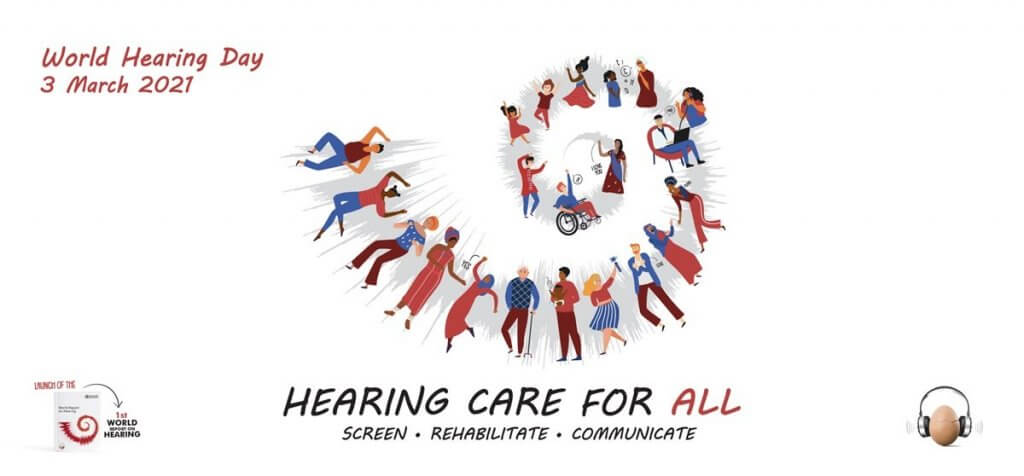
Every year, the third of March is World Hearing Day.
It's an initiative from the World Health Organisation and a global call for action to address hearing loss, particularly in developing countries.
And it's something we're huge supporters of.
World Hearing Day messages
The key messages for the public in this year's campaign are:
- Good hearing and communication are important at all stages of life
- Hearing loss can be avoided through preventative actions such as protection against loud sounds and good ear care practices
- Hearing loss can be addressed when it is identified in a timely manner and appropriate care is sought
- People at risk of hearing loss should check their hearing regularly
- People with hearing loss should seek care from a health care provider.
Our hearing is fundamental to our ability to communicate and to engage with the world around us.
Neglect it, don't look after it, and we are putting a critical part of our lives at risk.
Loud music
One example.
The World Health Organisation now estimates that over a billion adolescents and young adults are at risk of avoidable, irreversible hearing loss due to the common practices of listening to music at loud volumes through earphones.
The World Hearing Day campaign has played a big part in sharing some important messages and warnings like the one above. And this year sees the launch of the world report on hearing, a detailed look at the latest evidence and research.
Hearing care at every step of the roadmap

On 22 February the Government set out its roadmap that will hopefully - if all goes to plan - lead to all Covid restrictions being lifted in England by 21 June.
The plan has a number of steps:
- 8 March: all children back to school
- 29 March: six people (or two households) allowed to meet outdoors
- 12 April: non-essential retail opens; indoor leisure and hospitality venues outdoors
- 17 May: most social contact rules lifted outdoors; six people (or two households) can meet indoors; indoor hospitality opens
- 21 June: all legal limits on social contact removed
We're sure you've seen them already, but here's the roadmap in full.
We'll be open at every step of the roadmap
Like we have been since the pandemic first reared its ugly head, we'll be OPEN and here for you at every step of the roadmap at our practices in Grantham and Nottingham.
As an essential service, we're OPEN for hearing care and wax removal services.
All our hearing healthcare professionals have had their first Covid vaccinations and will be fully protected soon. And we have PPE and infection control measures in place to keep everyone safe.
You can call us to find out more or to book an appointment:
NOTTINGHAM - ☎️ 01159 618351
GRANTHAM - ☎️ 01476 249319
And you can find out how we're keeping everyone safe at our clinics.
Hearing loss and the pandemic
PUBLISHED 27 JANUARY 2021
A new study in the US has shown the additional impact of the pandemic on those with a hearing loss.
Ninety-five percent of people living with hearing loss in the States say masks and facial coverings impact their ability to communicate during the COVID-19 pandemic.
Covid-19 has also heightened levels of anxiety, social isolation and other mental health-related effects among nearly half of the nation's hearing loss community.
The survey was carried out by the Hearing Loss Association of America (HLAA) and published on 26 January.
We're sure its findings would be similar in the UK.
Two key findings:
- 70% of those with hearing loss say they are more aware of their hearing loss due to the pandemic
- 46% notice their hearing loss influencing other aspects of their mental health since the pandemic began
Pandemic and hearing loss
Tim Browning is the HLAA's digital communication and web specialist, and a bilateral hearing aid user.
"With the prolonged pandemic," Tim says, "I didn't realise how the mental stress and fatigue over time would add to the challenge of understanding with masks. I'm missing the day-to-day practice of listening and talking to people in face-to-face situations. Online communications and captioning are wonderful, but to effectively hear requires continual practice of hearing in all situations. When we get out of practice, it becomes harder and harder to understand with masks."
Barbara Kelley, executive director at the HLAA, says the impact the pandemic has had on people with hearing loss is enormous.
"I hope coming out of this pandemic," she says, "we'll see people continue to take their hearing loss seriously and treat it appropriately."
Hearing is VITAL to our wider health and wellbeing. It's our connection to our friends and family, to the world around us.
We're here to help during the pandemic. Call us on 01159 618351 for advice and a friendly chat.
As an essential service, our practices in Nottingham and Grantham are OPEN during the winter lockdown. And we'll be open for you throughout the pandemic, with strict measures in place to keep you safe.
Whatever the tier, we're here for you
We're OPEN for you whatever tier of restrictions we're in.
Right at the start of the pandemic, community hearing care services like Correct Hearing were classed as an essential service by the UK Government.
When the second national lockdown came into force, this didn't change. And it didn't change when tiered restrictions returned early in December.
So we'll be open in Carlton and Grantham.
If you already have an appointment with us, please do keep it.
And give us a call on 01159 618351 if you need help with your hearing.
It is so important that you don’t put your hearing on hold during the pandemic. Please don’t suffer in silence.
We are OPEN during the second lockdown
We are OPEN during the second national lockdown.
Right at the start of the pandemic, community hearing care services like Correct Hearing were classed as an essential service by the UK Government.
As the second national lockdown comes into force, this hasn’t changed.
So we'll be here for you throughout the second lockdown and beyond.
If you already have an appointment with us, please do keep it.
And give us a call on 01159 618351 if you need help with your hearing.
It is so important that you don't put your hearing on hold during the second lockdown. Please don't suffer in silence.
Saturday appointments now available
For the first time, you can now come and see us at the weekend!
Starting on 3rd October, you can now book an appointment for hearing care and wax removal on a Saturday.
We know that many people understandably put their hearing treatment on hold during the first few months of the pandemic.
But recently, more and more have been looking to visit us in clinic again. And we can do this, with strict PPE, infection control and patient management in place to keep everyone safe.
If we can, we will always try to provide our services remotely first, and we have a range of new virtual hearing care services in place. But if we think you need to come into clinic, then we can manage that safely.
Call us on 01159 618351 to speak to us about your hearing care needs.
Hearing care you can trust in the new normal
DON'T PUT YOUR HEARING ON HOLD
Hearing care you can trust in the new normal
In-clinic appointments available - with strict safety measures in place
New virtual hearing care services - tests, programming and more from the comfort of your own home

We know that many people put their hearing treatment on hold over the last couple of months but are now keen to seek help as soon as possible. They have experienced the impact that an untreated hearing issue can have. The current need for social distancing and isolation not only brings communication challenges but also risks accelerating the known effects of an untreated hearing issue.
At Correct Hearing, we can help. We are providing face-to-face hearing care appointments at our Nottingham hearing centre, as well as enhancing the virtual consultations that you can access from the comfort of your own home.
We’re a friendly, family-run independent hearing centre where your safety and good health – as always – is our prime concern. This is why we’ve taken a great deal of time before starting to offer in-clinic appointments to make sure we’ve properly reviewed the scientific data, the guidance from the Government and the latest clinical guidance from audiology professional bodies.
Appointments at our Carlton hearing centre
When you call us, we will run through a series of questions to determine the level of your audiological need and if we can see you at our clinic.
We’re limiting the number of appointments in a day so that only one client will be allowed on the premises at any one time, so you won’t have to worry about meeting others and keeping your distance. We’re also doing this to enable safe movement into and out of our clinic, and to allow for additional cleaning in between appointments using the highest infection control measures.
Strict safety measures in place
Your appointment will be carried out at a distance of two metres wherever possible. A few things will require us to work closer to you, though – such as looking in your ear, performing micro-suction or taking aural impressions. We will have strict measures in place during these times – including personal protective equipment (PPE) and infection control.
Our new virtual hearing care services
Some of our clients will still need to remain shielded. And we understand that some will be unable to visit us easily or won’t want to be leaving their home at the moment. This is why we’re extending our remote hearing care services using the latest state-of-the-art technology.
From the comfort of your own home
We’re aiming to make our remote consultations feel as close to a face-to-face, in-clinic experience as we can. We can now perform hearing tests, hearing aid programming, adjustments and troubleshooting. All remotely. All from the comfort of your own home. You’ll need an iPhone or iPad to access our virtual services, but please don’t worry if you don’t have one. We’re providing a free technology loan service, safely delivered to your door, and will talk you through how to use it step by step.
Get in touch
If you have any questions about our in-clinic appointments at our Carlton hearing centre, or want to find out more about our new virtual hearing care services, please do give us a call on 01159 618351. We’d be delighted to hear from you, and to help you with your hearing care needs.
Stay safe.
Sarah
Sarah Vokes
Correct Hearing managing director and audiologist
The Molly Watt Trust – our wonderful charity for 2020
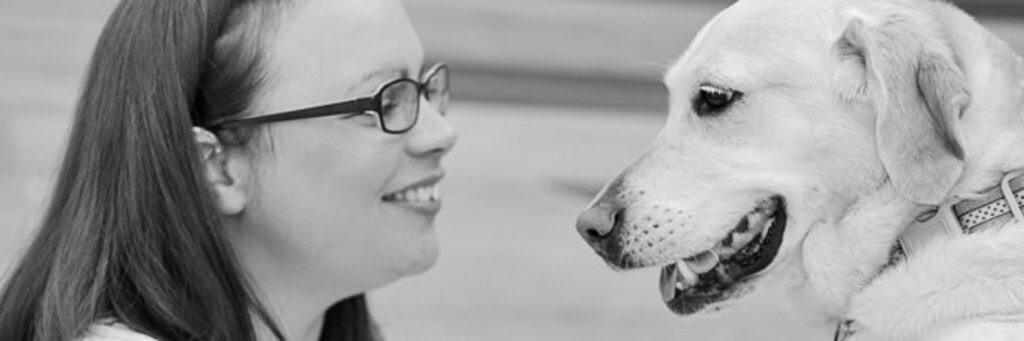
The gift of hearing is a powerful one. And by supporting the Molly Watt Trust we see just how powerful and precious it can be.
The charity works to raise awareness of Usher Syndrome, a rare genetic condition that causes both Deafness and retinitus pigmentosa, a form of blindness.
Usher syndrome is a progressive condition and to date there is no cure. It affects both hearing and sight, and for some it also affects balance. The condition leads to communications challenges, mobility issues and can often lead to anxiety and depression for those who live with it.
We worked with the Molly Watt Trust on their Access to Hearing project, which – in association with GN Resound – is creating several case studies on hearing aid users living with Usher Syndrome. Each of the individuals featured in a case study is fitted with smart hearing aids.
This is where we came in.
Usher syndrome
We met Claire Cooper – who has Usher syndrome – and her guide dog Minnie at our Carlton practice. Claire has a severe hearing loss and ‘5 degrees vision’, which means that she has almost no peripheral vision. This makes it difficult, for example, to see approaching traffic from left or right.
We carried out a full hearing assessment for Claire and fitted her with some ReSound LiNX Quattro smart hearing aids.
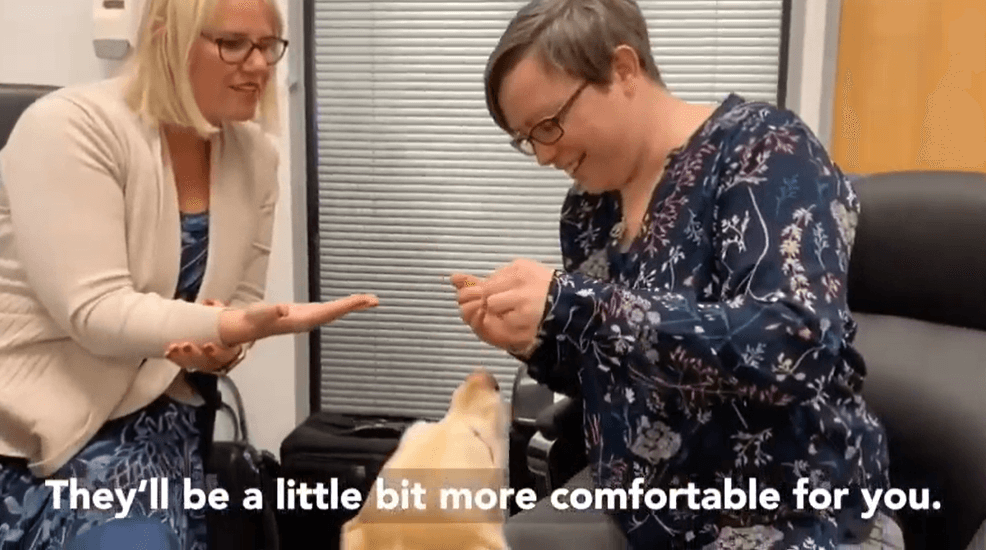
After the fitting, Claire said: "After a whirlwind day I’d like to thank The Molly Watt Trust for giving me the gift of hearing. Thanks to ReSound and Correct Hearing for supporting me and fitting me with these amazing life-changers."
The Molly Watt Trust - our 2020 charity of the year
We were delighted to be able to support this wonderful charity, and to have fitted the hearing aids for Claire. We’ll continue to support the Molly Watt Trust throughout 2020 as our Charity of the Year. You can find out more about their work on their website. And you can see videos from our fitting for Claire on the Molly Watt Trust’s Facebook page.
Claire is taking part in the Tough Runner Staffordshire Epic Trail 10k in May 2020 to raise money for the Molly Watt Trust to help more people with Usher syndrome. Please support her if you're able to by donating to her campaign.
A new independent hearing practice in Grantham
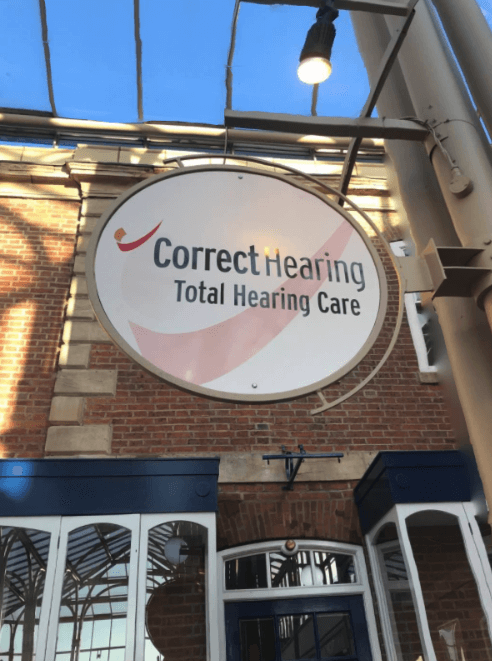
You can now get the best independent hearing care and a fabulous range of hearing aids in Grantham at our brand-new practice in the town.
In 2019 we celebrated the 10th anniversary of our practice in Carlton, Nottingham, so we were delighted to enter our second decade by opening our second practice for the people of Grantham in 2020 in the town centre’s George Centre.
It’s a new location, but we’re delivering the same fantastic hearing healthcare services that go way beyond the sale and fitting of hearing aids.
As an independent, family-owned practice, you can benefit from our holistigranthamc approach to every aspect of your hearing health. Being truly independent means that we always deliver the right solution that is best for you.
Our TotalCare scheme is also available at our new practice. This is our unique hearing healthcare package that ensures we see you every six months after the fitting of your hearing aids – plus much more. TotalCare is our promise to deliver exceptional ongoing care and attention for you.
And our professional wax removal service is also available at Grantham. You can get troublesome ear wax sorted – safely and effectively – by your qualified hearing healthcare professionals.
You can call the Grantham practice on 01476 249319.
Lower the risk of dementia - look after your hearing

Hearing is about so much more than sound.
A growing body of evidence is demonstrating the links between hearing and our wider health and well-being. One of the starkest is the link between hearing and dementia.
An international study in The Lancet – you may have seen it in the media as it was widely reported – found that one in three cases of dementia could be prevented if more people looked after their ‘brain health’ throughout life. Good hearing is integral to good brain health.
The study authors listed nine factors that contribute to the risk of dementia. If addressed, they said, these could lower the risk of onset or the severity of the condition.
Top of the list was mid-life hearing loss.
Important to address hearing loss in mid-life
The Lancet report showed that a quarter of the risk that you can manage for yourself is linked to hearing. And for the first time they raised the importance of addressing this in mid-life – between 45 and 65 – not when it has been left untreated to later life and the damage has already been done.
The reasons for this connection are not yet fully understood. But there’s lots of work under way to find definitive answers.
However, current thinking is around the brain becoming overloaded due to having to work harder to hear, or hearing loss causing social isolation, with less social engagement resulting in a decline in cognitive function.
Some have put it this way: “The strain of decoding sound over the years may overwhelm the brains of people with hearing loss, causing cognitive fatigue, leaving them more vulnerable to dementia.”
Take control of your hearing health and lower the risk of dementia
Whatever the reason, it is now certain that a link exists.
So it is more important than ever that you look after your hearing. And that you have a regular hearing assessment to monitor your hearing health.
The risks of ignoring untreated hearing loss are way too high.
Get in touch today for a FREE hearing assessment with Correct Hearing. You can see us in Carlton, Grantham or Southwell. And if you can’t get to us, we’ll come to you with a FREE assessment in the comfort of your own home.
Ear wax removal at Correct Hearing

Ear wax removal. When do you need it? Do you need to see your GP (that's a no, by the way?). Can we sort this for you at Correct Hearing?
But first, what is ear wax and why do we have it?
It’s something we all have – and for good reason.
It protects our ear canal. It helps with natural cleaning and lubrication. And it provides a degree of protection against bacteria, fungi, water and insects (yes, we do have to remove them sometimes).
Ear wax is good. It’s important for the good health of our ears.
But too much? Well, that’s bad.
If it becomes excessive, or compacted, then we have a problem – often a loss of hearing due to external sounds not being able to make it to the eardrum. And then it's time for ear wax removal from a qualified hearing healthcare specialist.
You don't need to see your GP to get it sorted. No need to wait in a queue for ages to book an appointment. No need to wait for ages in the GP waiting room...

Make an appointment with Correct Hearing and see us at our Nottingham or Grantham clinic. You could see us within 48 hours.
Some fascinating facts about ear wax
- Earwax comes in two types – wet and dry. Your type depends by and large on your genetic make-up. Those from north-eastern Asia are more likely to have dry ear wax, while ear wax for most people in other regions tends to be wet
- The gene responsible for people having dry ear wax is also responsible for them having less body odour than those with wet ear wax. Who knew?
- Scientists have discovered that ear wax can help in the diagnosis of certain diseases. Take two odour-producing metabolic diseases that you’ve probably never heard of – maple syrup urine disease (we’re not making this up) and alkaptonuria. They can be identified in ear wax long before being diagnosed using traditional blood and urine analysis
- Earwax has been useful to anthropologists for studying mankind’s early migratory patterns
- Odours in ear wax can often tell us what a person has eaten, or where in the world they have been (but don’t worry, if you come to us for ear wax removal treatment, we won’t sniff your ear wax. Promise).
Ear wax removal
It’s not necessary to remove wax unless it becomes excessive or is affecting your hearing.When it does, there are some simple things you can do.
Softeners are available from high-street pharmacies and can be effective if the wax build-up isn’t too great.
One thing you should never do – never, ever do – is use cotton buds or anything like them to clean your ears, or to try and remove wax. This will only compact the wax and push it nearer to the eardrum. If you take one thing away from this blog post, please make it this.
Many GP practices will offer ear syringing, which pumps warm water into the ear to loosen and remove the wax. If the wax is compacted, you might need to have it removed at an ENT clinic. Some advocate ear candles – but certainly not us. They can be dangerous and are totally ineffective.
Ear wax removal at Correct Hearing
Our audiologists at Correct Hearing have been trained to use the latest wax removal technology. We use the microsuction technique – it’s gentle, safe and effective, and completely syringe-free. And you will be able to see detailed images of your ear canal on screen before and after your wax is removed – if you want to, that is! A GP referral is not needed, and we can sometimes offer same-day appointments.
You can say farewell to troublesome ear wax at our clinics in Nottingham and Grantham.
Tempted to buy a hearing aid online? Read this first!
You can buy anything online now, can’t you?
And it’s no surprise that online shopping is continuing to go through the roof. It’s convenient. You can save a bit of money. You can browse different shops and suppliers at the click of a button.
But there are certain things that you shouldn’t buy online.
Like a hearing aid.
A hearing aid is classified in law in the UK as a medical device. It can only be sold and fitted by a qualified Hearing Aid Audiologist who is registered with the Health and Care Professions Council (HCPC).
There are good reasons why this is the case.
Before any hearing aid is prescribed there needs to be a full assessment, including a range of tests and a full understanding of a person’s hearing environment and lifestyle. Then and only then can a suitable device be recommended.
The device then must be carefully fitted and finely tuned to suit the individual’s need. For many, hearing with their new devices will require rehabilitation over time and considerable support may be required before they provide maximum benefit for the user.
A hearing healthcare professional uses the technology available to them – but there is so much more to professional hearing care than simply selecting a hearing aid.
Here at Correct Hearing our audiologists are not hearing aid salespeople. They are fully trained, highly qualified and experienced hearing healthcare practitioners.
We are committed to providing the best hearing healthcare service in our region. We provide long-term, ongoing support to all our clients, including regular full hearing assessments and device adjustment – all free of additional charges.
We can advise on and supply a variety of assistive listening devices and provide rehabilitation support if needed.
We’re passionate about caring for every aspect of your hearing health.
Come and see us and find out more. We have clinics in Carlton, Grantham and Southwell. And if you can’t get to us, we’ll come to you.
Is golf bad for your hearing?
Bear with us on this one…
We all know that exposure to loud noises, particularly over time, can damage your hearing, right?
This is why noise protectors are worn by those working in noisy conditions. And why we recommend wearing earbuds if you’re at a loud concert.
But loud, potentially damaging, noise can come from the most unexpected of places.
Like the golf course.
Golfers could actually be damaging their hearing from playing the game they love.
As we said at the beginning, bear with us…
The risk is associated with the ‘sonic boom’ created by thin-faced titanium drivers. It is well documented that ‘impulse noise’ – a short-duration, high-pitched disturbance – can be equally damaging to your ears as what we commonly think of as damaging noise, like a pneumatic drill or a loud rock concert.
This was first reported in the British Medical Journal back in 2009, when a 55-year-old man went to his doctor with tinnitus and hearing loss. The probable cause was identified as being down to his using a King Cobra LD titanium driver three times a week over 18 months.
The keen golfer described the noise of the club hitting the ball as sounding “like a gun going off”, and test results showed that his hearing loss was typical of those seen with exposure to loud noises.
An audiologist with the Royal National Institute for the Deaf said at the time: “Exposure to loud impulse sounds over time can cause damage. It is a short, sharp burst of very loud peak sound with this type of golf club that can damage someone’s hearing.”
Not everyone plays golf.
But everyone should be acutely aware of the damaging noise that’s in their lives and their environments. And it may not be what you think.
If you’re worried about your exposure to noise, do get in touch and we can help. If required, we can also recommend the best noise protection devices for you.
We provide free hearing assessments in Carlton, Grantham and Southwell. And if you can’t get to us, then we’ll come to you – for no additional charge.
Come and see us at our August open days
Free hearing assessments and the latest technology at our August open days in Grantham and Carlton, with a ReSound expert joining us.
Tempted to buy a hearing aid online? Read this first!
Hearing aids are UK medical devices, sold and fitted only by qualified professionals. Why buying one online is a false economy.
Correct Hearing Terms and Conditions
Our terms of supply and warranty for hearing instruments and associated products, including TotalCare cover and your Hearing Assessment form.
Are you wearing hearing aids but having a seemingly difficult time hearing music? It's not you. Traditional hearing aids are designed to help you process speech acoustics, but not necessarily music.
We want to ensure that you have the right equipment to enjoy and amplify the listening experience. Check out these top hearing aid accessories for music lovers.
Bone Conduction Headphones
Bone conduction headphones were designed with those experiencing hearing loss in mind. Instead of fitting in the ear canal, bone conduction headphones deliver sound to the inner ear through vibrations from the skull. And because they don't go in the ear, they also won't interfere with a hearing aid that is already in the ear.
Portable Hearing Loop
A hearing loop sound system delivers sound from concert halls, live events, and large rooms directly to the hearing aid. Facilities install induction loop aerials that send out wireless signals that a hearing aid will pick up. All hearing aids work with this system.
If you're attending a smaller concert (an open mic, perhaps) or have one-on-one music lessons with someone, the facility may not have this technology installed. Fortunately, you can purchase a portable hearing loop system.
Bluetooth Compatible Hearing Aids - MFi and ASHA
Bluetooth is our favourite invisible accessory for hearing aids. Made for iPhone (MFi) and Audio Streaming for Hearing Aids (ASHA) are Bluetooth-compatible hearing aid apps designed to work with iPhone and Android phones. This wireless connectivity allows music played from your phone to go straight to the hearing aid. In turn, this improves overall audio quality and your music listening experience.
You will need MFi-specific hearing aids to take advantage of iPhone-to-hearing aid compatibility.
Fun Hearing Aid Accessories
We covered the tech, but what about the fun accessories that match your music-loving spirit? Etsy has a great selection of hearing aid stickers and charms to match the mood of any music you're listening to -- and they're especially fun for young kids and teenagers.
● For Metal Fans, these hearing aid skull beads show that you're just as hardcore as the music you listen to.
● Try these silver hearing aid and cochlear implant decals if you're more into indie or folk music.
● For the musician, why not go straight to the point? These flashy guitar hearing aid charms bring the bling.
Don't Turn the Volume Up, Accessorise!
Turning up the volume on your hearing aid won't change the fact that your hearing aid may not naturally pick up on music's frequencies. Instead, try out one of the technologies listed above to improve your music listening experience!
Contact us today info@correcthearing.co.uk
Professional hearing care from qualified audiologists in Nottingham and Grantham - or in the comfort of your own home.
